

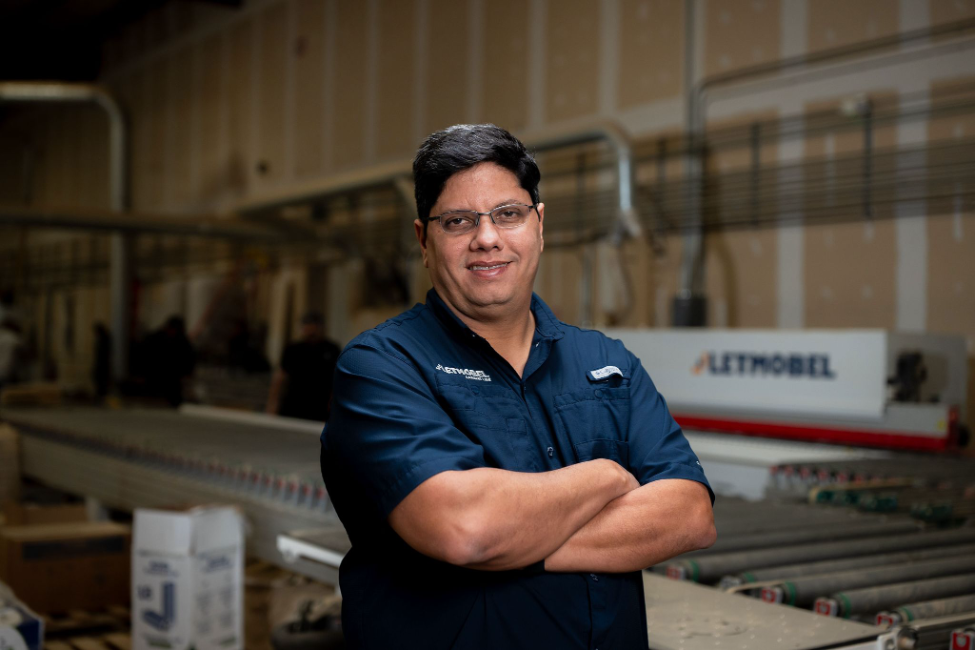
Gerardo Siegert, CEO of Texas Wooden Solutions Corp., has driven the development of Thermally Fused Laminates (TFL) in the United States. His professional focus centers on manufacturing composite wood-based products that serve as sustainable alternatives for construction and decorative applications. Market demand for efficient building materials continues to reshape the landscape of domestic production networks.
The woodworking industry faces ongoing pressure to balance operational cost control with the necessity of large-scale output. Siegert leverages an extensive background in mechanical engineering alongside corporate finance expertise to address these common production bottlenecks. His leadership reflects a broader industrial shift toward greater resilience in domestic manufacturing following global supply chain disruptions.
Shaping foundations through international manufacturing
Operating in developing economies often requires establishing custom infrastructure to overcome systemic limitations in the industrial sector. Early operations in Caracas exposed industry leaders to environments where graduates from Universidad Simón Bolívar had to forge independent paths in the wood products industry. As Siegert notes, “The political and economic environment in the country created significant challenges and limited opportunities for engineers.”
These operational constraints necessitate the independent design of manufacturing machinery and the management of high-pressure laminate facilities from the ground up. “The challenges I faced in Venezuela taught me resilience, adaptability, and the importance of creating efficient systems—principles that continue to guide how I approach manufacturing and business growth in the United States.”
Combining mechanical engineering principles with strict financial strategy provides a distinct advantage when launching modern production facilities. Leaders managing expanding corporate entities can be reached via specialized business contact channels to facilitate complex industry collaborations. Building multiple factories internationally provides an invaluable blueprint for identifying viable opportunities in highly competitive environments.
Optimizing the Texas production facility
Transitioning manufacturing operations to the United States introduces different cost structures, primarily centered around escalating labor expenses. Constructing a highly automated manufacturing facility requires precise engineering analysis to maximize output while minimizing waste. Siegert states, “From the very beginning of building our Humble, Texas facility, my focus was on creating an efficient operation that could compete in the U.S. market through productivity, process control, and continuous improvement.”
Measuring facility performance through objective financial data allows organizations to identify and eliminate inefficiencies within the production lifecycle. “One of the first internal indicators we developed was a productivity metric that measured labor cost against panels produced.” Evaluating the direct relationship between workforce investment and manufacturing output remains essential for sustainable operational growth.
Establishing a culture of accountability involves recruiting reliable personnel for day shift roles and maintaining competitive operational benchmarks. Regular assessments of facility conditions, often reflected in employee feedback platforms, provide critical insights into workforce dynamics and safety. Engineering discipline combined with financial metrics establishes a robust operational foundation within the competitive American manufacturing sector.
Scaling omnichannel domestic manufacturing
Global supply chain disruptions and escalating international freight costs have incentivized companies to strengthen their domestic manufacturing capabilities. Adapting to nationwide consumer demand requires standardizing physical products for efficient packaging and reliable fulfillment. Siegert explains, “We were able to expand the Letmobel brand across all fifty states by developing an RTA (Ready-to-Assemble) furniture business model supported by e-commerce channels, particularly through Amazon.”
Shifting market conditions often dictate strategic pivots to maintain profitability and long-term operational alignment. “Rather than continuing as an RTA furniture company focused primarily on e-commerce, we made a strategic decision to reposition Letmobel as a kitchen manufacturing company serving the Texas construction and building industry.” This necessary transition involved retooling facilities to produce USA-made frameless cabinets for localized builders and interior designers.
Delivering structured architectural solutions requires a diversified product portfolio that meets the needs of a wide range of construction projects. Cost-conscious multifamily developments require efficient, standardized solutions, while more complex residential projects benefit from professionally designed kitchen configurations that integrate seamlessly into modern living spaces. Understanding evolving customer expectations enables manufacturers to successfully transition from pure e-commerce to targeted regional B2B partnerships.
Managing complex international supply chains
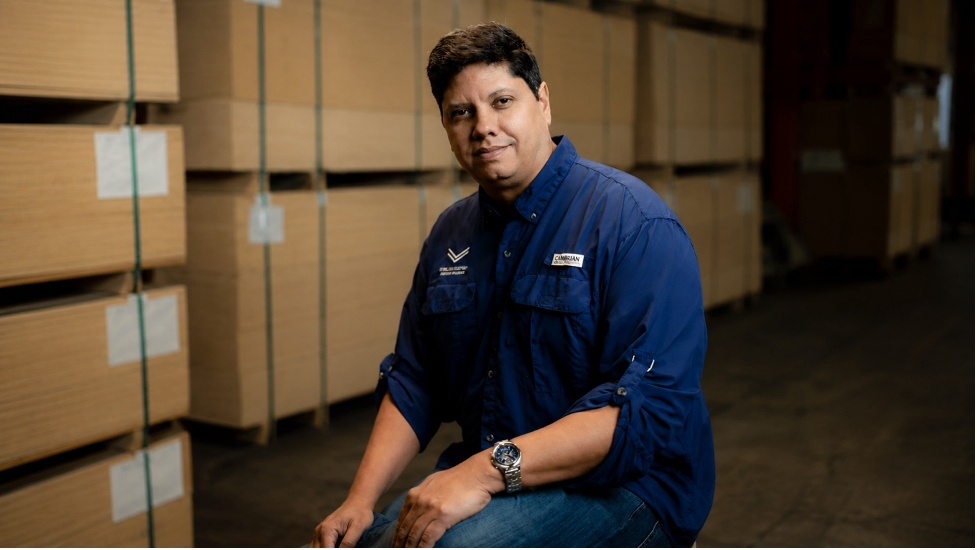
Expanding production capacity across multiple states relies heavily on standardized workflow organization and continuous performance monitoring. Launching a new site at a physical location in Arizona demands rigorous adherence to established protocols. Siegert notes, “The Phoenix facility was designed as a mirror of our Humble, Texas operation, allowing us to replicate the same production standards, quality controls, and operational systems that had already proven successful.”
Transferring core performance indicators across state lines minimizes variances in output quality. “By maintaining consistency between facilities, we can ensure that customers receive the same level of quality regardless of where the product is manufactured.” This consistency is vital for processing materials comprising specific polymer and wood dust compositions.
Coordinating international sourcing, inventory management, and cross-border logistics requires disciplined operational planning and strong execution. Manufacturers operating in competitive industrial markets rely on experienced leadership to anticipate supply chain challenges, optimize inventory levels, and respond effectively to changing market conditions. This disciplined approach strengthens supply chain resilience, improves operational efficiency, and supports sustainable, long-term growth.
Driving production efficiency and safety
Achieving the highest standards of product quality and workplace safety requires year-long continuous improvement initiatives on the factory floor. Data-driven measurements help management pinpoint exactly where efficiency is lost between labor inputs and actual capacity. “Through detailed analysis of our manufacturing process, we identified opportunities to improve workflow, optimize equipment utilization, reduce downtime, and better coordinate the different stages of production,” Siegert observes.
Systematic tracking of these manufacturing variables often results in measurable productivity gains that capture significant industry attention. “As a result of these engineering and operational improvements, we increased our average production from approximately 400 panels per shift to 550 panels per shift.” Such metrics play a crucial role when corporate accomplishments are formally evaluated for specialized industry recognitions.
Organizations showcasing their technical advancements at major trade exhibitions must consistently back their claims with concrete operational data. By implementing rigorous process controls, entities successfully earn placements as recognized award finalists within their designated sector. Reducing overall production costs while simultaneously increasing output forms the ultimate foundation for long-term scalability.
Leveraging agility and specialized expertise
Smaller manufacturers frequently lack the vast financial resources of large enterprise category leaders but compensate effectively through swift execution. Siegert states, “Our advantage as a company is our agility. Unlike much larger organizations, we can move quickly, make decisions efficiently, and adapt our processes based on customer needs and market changes.”
Maintaining strict operational discipline ensures that fast-paced structural changes do not compromise product integrity or delay aesthetic variations, such as the introduction of specific decorative styles. Combining advanced engineering knowledge with practical operational experience drives continuous improvement across all critical production phases. “The difference is that we bring these principles to the market with the flexibility and entrepreneurial mindset that allows us to innovate quickly and create value for our customers.”
Evaluating peer achievements as a technology and business evaluator reinforces the importance of data-driven decisions. Integrating these core entrepreneurial principles allows agile organizations to command profound respect within highly competitive global arenas. Operational agility ultimately dictates long-term survival in rapidly shifting industrial sectors.
Balancing engineering and strategic expansion
Managing both expansive commercial networks and direct consumer sales demands a precise combination of technical involvement and broad executive oversight. Siegert asserts, “My engineering background has always been the foundation of how I approach business. I believe that understanding the details of the operation is essential, especially in manufacturing, where small improvements in processes can create significant results.”
Effective corporate leadership requires intelligently delegating operational tasks while securing resources for diverse structural designs. “My goal is not to solve every problem personally, but to create an organization where people have the tools, knowledge, and accountability to solve problems effectively.” This structured approach ensures that internal teams can independently address manufacturing challenges without causing administrative bottlenecks.
Connecting granular technical details, such as integrating standard materials with specialized finishing technologies, to wider market opportunities actively drives sustainable commercial growth. Building a highly robust commercial presence relies entirely on teams empowered to execute complex strategic visions. Empowered teams ultimately bridge the critical gap between localized factory floor improvements and expansive national distribution.
Pushing boundaries in modern manufacturing
The ongoing evolution of industrial production relies heavily on the constant pursuit of automation and deep supply chain fortification. Organizations strictly focused on scaling must look far beyond sheer physical size to elevate overall industry standards. “The next major frontier for our company is continuing to expand our manufacturing capabilities while becoming an even stronger partner for the industries we serve,” Siegert explains.
Facilities tracking massive material throughput, comparable to advanced plants generating hundreds of thousands of square feet annually, must prioritize operational excellence above all. Integrating advanced software systems with highly skilled personnel ultimately determines long-term viability in a fiercely competitive marketplace. “The future of manufacturing will belong to companies that can combine technology with human expertise.”
Adapting quickly to fluctuating market demands while maintaining strict quality controls provides a distinct and measurable operational edge. Continuous capital investment in workforce development and production technology ensures lasting corporate resilience against future industrial supply shifts. These strategic investments ultimately define the boundary between stagnation and sustained market leadership.
The trajectory of modern production increasingly favors organizations capable of merging technical precision with agile corporate strategies. As domestic manufacturing ecosystems evolve to address supply chain vulnerabilities, industry leaders must consistently prioritize continuous improvement and data-driven accountability. Stabilizing localized production environments mitigates external disruptions and establishes a reliable foundation for sustainable sector growth.