

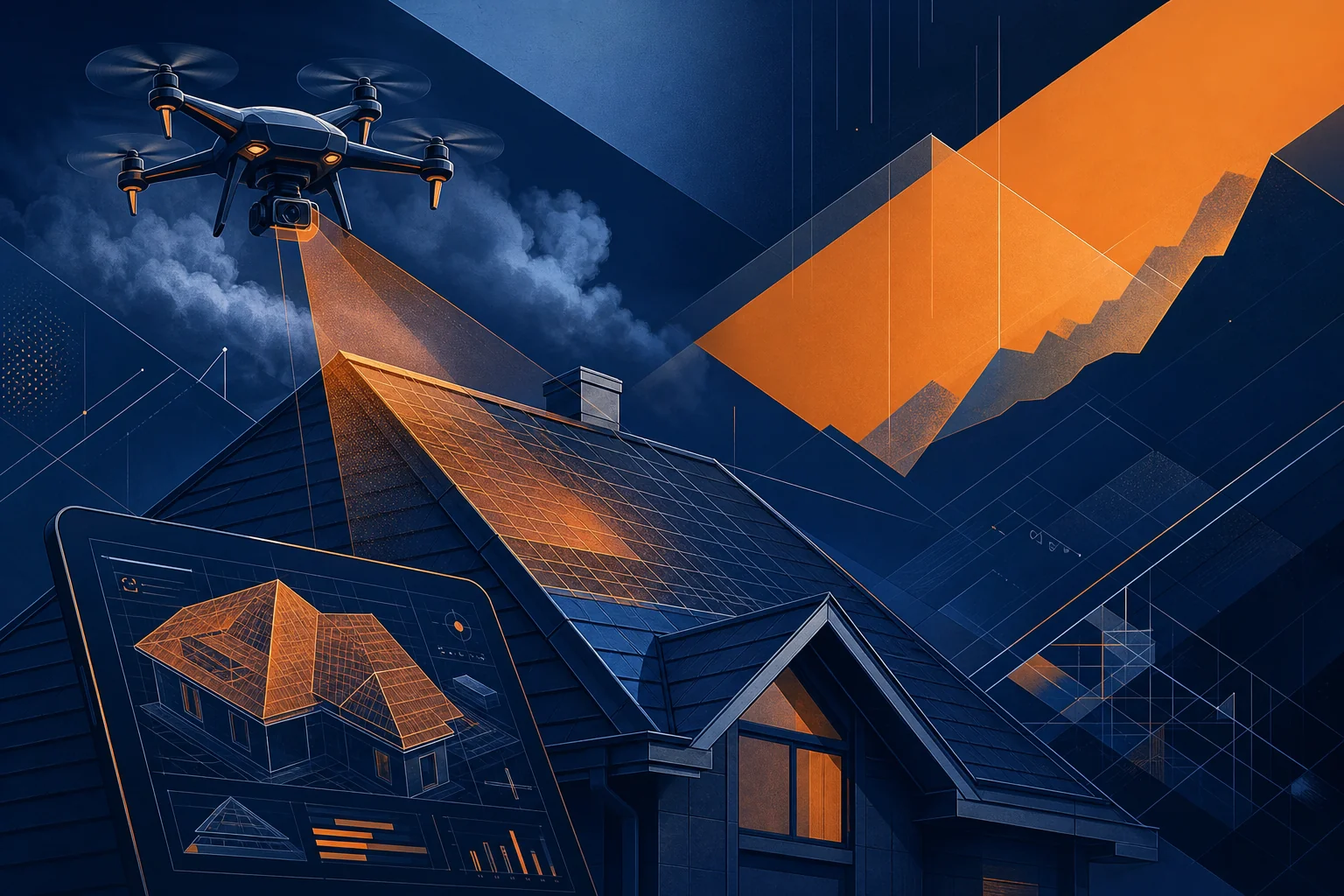
The U.S. insurance sector recorded at least $43 billion in severe convective storm losses through September 2026, marking the sixth-costliest period on record for such events. This surge in volume has forced roofing contractors to shift from manual inspection methods toward automated workflows powered by computer vision and aerial imagery.
Allianz Commercial estimates that hail accounts for 50% to 80% of all severe convective storm losses, a figure that drives the urgency for more efficient damage assessment. While Guy Carpenter reported that total storm counts were 36% above the 2016-2025 average through June, the specific distribution of hail damage remained volatile and localized. This unpredictability necessitates a triage system where software identifies probable strikes in test squares, allowing contractors to prioritize high-probability claims.
Aerial imagery platforms like EagleView and Hover have long provided the raw data for roof measurements, but the recent shift involves automating the post-flight analysis. Drones now capture hundreds of high-resolution images, which machine learning models classify to distinguish between hail impacts, blistering, and general wear. This transition reduces the physical risk to crews who previously relied on manual inspection of steep roof pitches.
Estimating software has shifted to automated data ingestion to address the administrative burden of these claims. Companies such as XBuild have introduced tools that generate residential roofing proposals in under 15 minutes, while platforms like Dalton Mills provide no-code solutions that integrate pricing, crew dispatch, and reporting. These systems prioritize data continuity, ensuring that measurements are not re-typed, which minimizes the risk of calculation errors that can erode profit margins on large projects.
The integration between drone imagery and insurance estimation software relies on increasingly standardized data interoperability. Modern platforms now utilize API-driven workflows to pull raw takeoff data directly from static PDF drawings or aerial measurement reports into the final estimate. By mapping specific pixel-based damage markers to standardized line items, these systems ensure that the contractor’s documentation aligns with the carrier’s automated underwriting requirements. This interoperability eliminates manual data entry, which historically served as the primary point of failure for accuracy in large-scale storm restoration projects.
The insurance industry has simultaneously adopted machine learning to score claim severity and route files, creating a new digital gatekeeper for contractors. Insurers now use automated systems to read line items and photo documentation before an adjuster ever opens a file. Consequently, contractors must standardize their photo labeling and documentation formats to align with the specific requirements of carrier-side estimating software.
Despite these advancements, the technology remains limited in its ability to perform high-level judgment. Models often struggle with older 3-tab shingles or identifying soft decking that requires physical contact to detect. Human expertise remains essential for navigating complex local building codes and managing the interpersonal dynamics of homeowners dealing with property loss.
The current bottleneck in the storm restoration cycle has migrated from the physical act of climbing roofs to the digital processing of claim files. Contractors who successfully integrate their measurement data directly into their estimation platforms gain faster claim approval times. This structural shift in the industry suggests that the next phase of growth will be defined by how well these disparate software tools communicate with one another.
Preparation for the upcoming spring season now centers on standardizing data collection protocols during the winter months. By establishing consistent checklists for elevations and slopes, companies can ensure their digital outputs are ready for automated ingestion by insurance carriers. This focus on data hygiene represents a shift in operational priority for how roofing firms manage their operations after a major weather event, ensuring that every job site follows a repeatable, machine-readable format.