

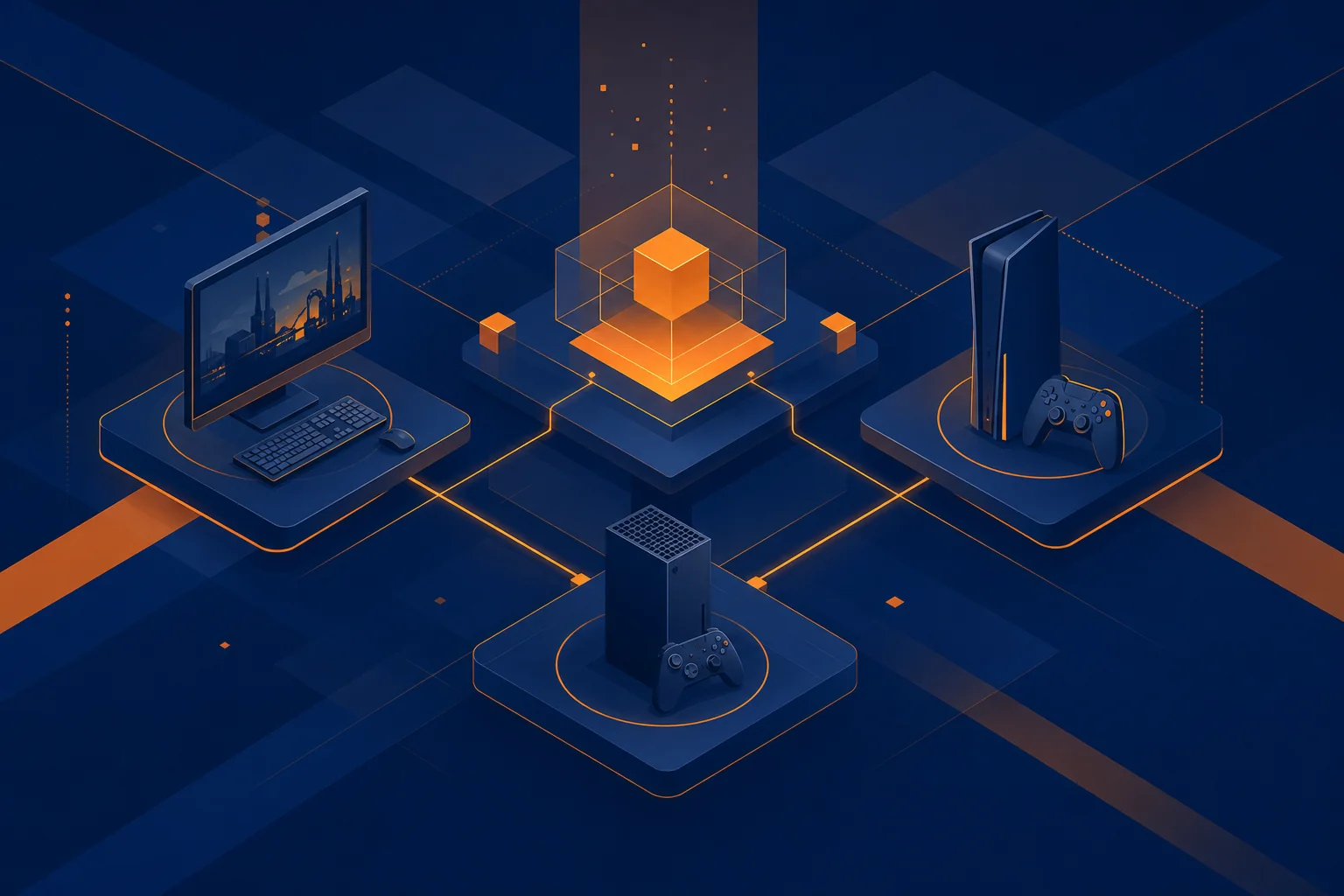
Coffee Stain Studios has deployed a significant update to its industrial simulation title, Satisfactory, effectively bridging the connectivity gap between PC and console platforms. Players operating on Steam, the Epic Games Store, PlayStation 5, and Xbox Series X/S are now capable of participating in shared co-op sessions, marking a transition toward full cross-platform parity for the sandbox experience.
The technical implementation relies on the Epic Games account infrastructure to facilitate communication and session management across disparate hardware environments. By leveraging this existing ecosystem, the developers have established a centralized authentication layer that allows users to bypass the traditional silos typically found between proprietary console networks and PC storefronts. This approach mirrors established industry practices for cross-platform integration, ensuring that session data and player identification remain consistent regardless of the underlying hardware.
Users seeking to engage in cross-platform multiplayer must link their respective console or PC profiles to an Epic Games account to enable the necessary handshake protocols. This requirement serves as the primary mechanism for cross-network matchmaking, providing a unified identity service that manages the complexities of cross-platform synchronization. The update ensures that the game state remains consistent across all participants, a critical requirement for a simulation game that relies on complex, persistent industrial infrastructure.
Coffee Stain Studios has maintained granular control over these networking options to accommodate varying player preferences regarding platform exclusivity. Within the Steam client, users retain the ability to restrict their multiplayer sessions exclusively to other Steam users, effectively opting out of the cross-platform matchmaking pool. This configuration provides a safeguard for players who prioritize localized network stability or prefer to avoid the overhead associated with cross-platform authentication services.
Single-player functionality remains unaffected by the new networking requirements, ensuring that the core simulation engine operates independently of external account dependencies. Users who prefer to play in isolation or within local environments are not required to maintain an Epic Games account, provided they are not utilizing the Epic Games Store client for their primary installation. This design choice preserves the integrity of the offline experience while simultaneously expanding the reach of the multiplayer sandbox for those who desire broader connectivity.
The integration of cross-platform support represents a shift in the technical roadmap for the title, emphasizing long-term scalability for its co-op features. By standardizing the networking backend, the development team has effectively reduced the friction associated with managing multiple distinct player bases. This consolidation of infrastructure allows for more efficient updates and maintenance cycles as the game continues to evolve on both console and PC hardware.
Engineers and developers often view such cross-platform implementations as a balancing act between user experience and the constraints of third-party authentication APIs. The reliance on the Epic Games framework suggests a strategic decision to utilize mature, battle-tested middleware rather than building bespoke networking solutions from the ground up. This choice minimizes the potential for synchronization errors in a game that tracks thousands of individual machine states and logistical connections simultaneously.
The implementation of this authentication layer also introduces specific considerations regarding server-side latency and packet handling. By routing session metadata through a unified service, the developers must ensure that the overhead does not adversely impact the real-time synchronization of high-frequency industrial data. Maintaining low-latency connections is essential for preventing desynchronization between players, particularly when managing complex factory layouts that require precise timing and state consistency across the network.
The stability of these cross-platform sessions will remain a primary metric for the development team as they monitor server performance across different hardware architectures. Future updates will likely focus on optimizing the latency and data throughput required to maintain consistent simulation states for players across diverse geographic and network conditions. Stakeholders should monitor the official developer blog for technical documentation regarding potential adjustments to the networking stack or updates to the authentication requirements.