

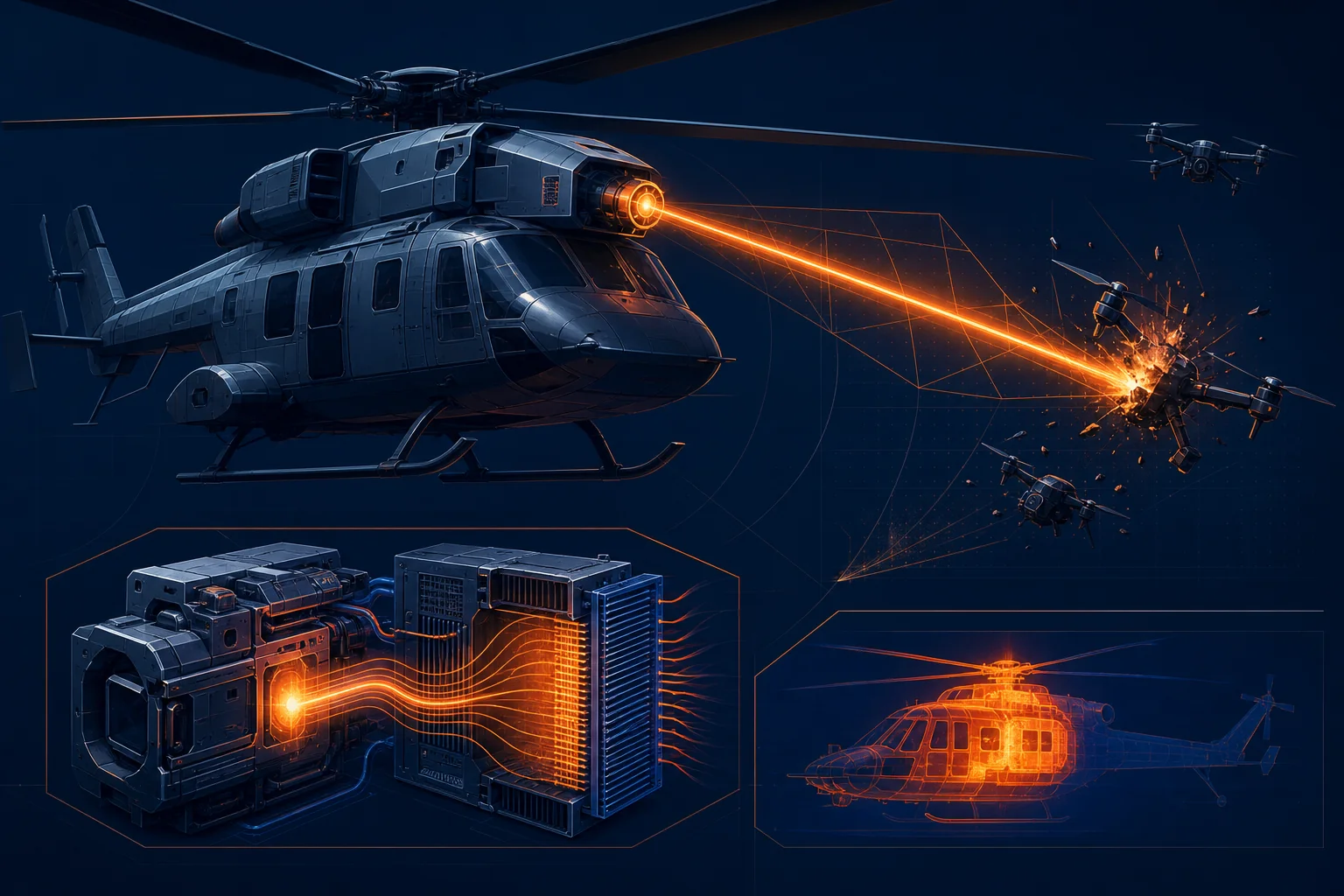
The Defence Research and Development Organisation (DRDO) is actively evaluating the integration of directed-energy weapon systems onto the Advanced Light Helicopter (ALH) Dhruv and the armed Rudra platform. This initiative seeks to provide Indian military forces with a mobile, high-speed solution for neutralizing the increasing prevalence of surveillance drones and loitering munitions in contested environments.
Military planners currently face significant pressure from unmanned aerial systems that can overwhelm traditional kinetic air-defense batteries. The proposed airborne laser pod would incorporate thermal imaging sensors, a precision rangefinder, and a beam-directing mechanism to facilitate real-time identification and engagement of hostile targets.
Unlike conventional interceptors, these directed-energy weapons operate at the speed of light, effectively removing the latency associated with missile flight times. The system relies on electrical energy rather than expendable munitions, allowing for a higher volume of engagements without the logistical burden of reloading missile inventories. This shift in operational logic provides a cost-effective alternative to firing expensive missiles at low-cost commercial or military drones.
DRDO has already validated the core technology through a 30-kilowatt class laser-directed energy weapon capable of damaging drone structures and disabling sensors. Testing has confirmed the system’s efficacy against both individual fixed-wing unmanned aircraft and coordinated drone swarms. These indigenous efforts are part of a broader strategic framework to establish layered air-defense capabilities across diverse operational domains.
The mobility of a helicopter-mounted system offers a distinct advantage over ground-based directed-energy assets. Rotary-wing platforms can rapidly reposition to protect military convoys or forward operating bases, providing a flexible defensive shield in remote or mountainous terrain. This agility is essential for maintaining air superiority in regions where stationary air-defense infrastructure remains difficult to deploy.
Helicopters operating near the Line of Control could utilize this technology to neutralize hostile surveillance drones before they gather intelligence on critical troop deployments. The capability serves as a vital defensive layer for protecting military infrastructure and sensitive assets from reconnaissance and strike drones that are increasingly common in modern conflict zones.
Engineering the transition from ground-based to airborne laser systems introduces substantial technical hurdles regarding power and thermal management. Helicopters must generate sufficient electrical power to sustain high-energy laser output without compromising flight performance or structural integrity. Engineers are currently investigating high-density power storage solutions and specialized alternators to meet the significant electrical load requirements of a laser pod.
Thermal management presents a secondary, yet equally critical, engineering challenge for the development team. High-energy laser systems generate massive amounts of waste heat during operation, which must be dissipated to prevent damage to the weapon system and the aircraft itself. Advanced liquid-cooling loops and heat exchangers are being considered to ensure the system can sustain multiple engagements during a single mission without overheating.
Environmental factors further complicate the deployment of laser-based weaponry in the field. Atmospheric conditions such as dust, haze, and water vapor can absorb or scatter laser energy, potentially reducing the effective range of the beam. Engineers must ensure the system maintains performance across varied climates, ranging from arid desert environments to high-altitude mountain sectors.
The success of this project hinges on the ability to package these components into a lightweight, aerodynamic pod suitable for the Dhruv and Rudra airframes. Balancing the weight of the power generation and cooling hardware against the aircraft’s payload capacity remains a critical design constraint. If these engineering challenges are resolved, the integration of directed-energy weapons would represent a significant evolution in India’s rotary-wing defensive capabilities.
Future development will likely focus on increasing the power output and operational range of these laser systems. As drone warfare continues to reshape the character of modern conflict, the ability to deploy mobile, energy-based countermeasures will become a cornerstone of tactical air defense.
The ongoing research by DRDO underscores the strategic imperative of adapting existing helicopter fleets to meet the demands of the next generation battlefield. This effort signals a clear recognition that future conflicts will be shaped increasingly by the proliferation of unmanned systems.