

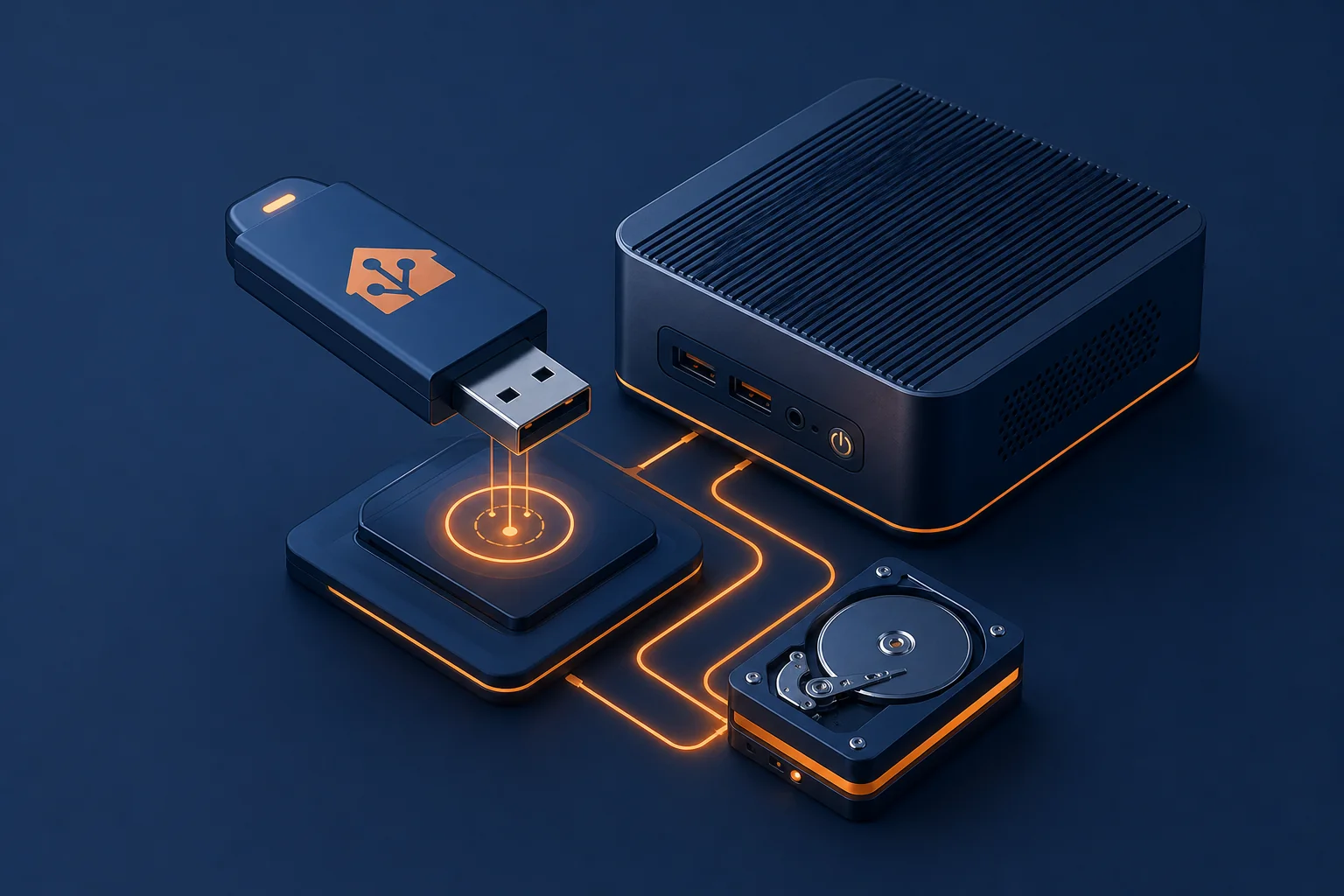
Home Assistant has introduced a new alpha-stage installer designed to simplify the deployment of its dedicated smart-home operating system onto generic x86-64 hardware. Released on October 23, 2026, the tool represents a significant shift in how users might repurpose mini PCs and older desktop units into centralized, high-performance automation hubs.
The current installation process for Home Assistant OS on x86-64 systems typically requires manual preparation of bootable media and the manual writing of disk images to a target drive. This existing workflow demands a degree of technical proficiency that acts as a barrier for many potential users looking to migrate away from cloud-dependent smart home platforms. The new installer seeks to abstract these steps behind a more intuitive interface, effectively lowering the technical threshold for hardware adoption.
Version 0.0.0-alpha.4 of the installer introduces a live USB environment that guides the user through the deployment process. By providing a full-screen interface, the developers are moving toward a more standardized installation experience that mirrors consumer-grade operating system setups. This transition is intended to reduce the reliance on command-line operations or complex disk-imaging utilities that often lead to user error.
Security and data integrity remain central to the new release, with the inclusion of automated verification for Home Assistant OS images against signed checksums. This mechanism ensures that the downloaded image has not been corrupted or tampered with before the installation process begins. The installer also provides more explicit warnings and clearer drive identification protocols to prevent the accidental erasure of secondary storage devices, a critical safeguard for users with multiple drives.
The technical challenge of installing an OS on x86-64 hardware often involves navigating complex UEFI/BIOS settings and partition tables that vary significantly between manufacturers. By automating the detection of these storage controllers, the new installer addresses a common pain point for users attempting to install Home Assistant on heterogeneous hardware. This abstraction layer is critical for ensuring that the OS can correctly identify the boot partition without requiring the user to manually configure disk labels, mount points, or legacy BIOS compatibility modes that frequently cause boot failures on modern mini PCs.
Furthermore, the installer must account for the diverse range of NVMe and SATA controller configurations found in consumer mini PCs, which often require specific kernel parameters to function correctly. By integrating these detection routines into the live environment, the developers are effectively creating a hardware abstraction layer that hides the underlying complexity of the x86-64 architecture from the end user. This systematic approach reduces the likelihood of kernel panics or driver-related errors during the initial boot phase, which are common hurdles when deploying Linux-based distributions on non-standardized hardware.
Despite these advancements, the project remains in an experimental proof-of-concept phase. The development team has not provided a definitive timeline for a stable release, and the current build is not intended for production environments where system reliability is paramount. Users are still advised to follow the official, established installation documentation for any critical home automation infrastructure.
The underlying motivation for this project appears to be the increasing popularity of low-power, x86-based mini PCs as ideal candidates for local smart home control. By creating a more accessible installation path, Home Assistant is positioning its platform to capture a broader segment of the DIY hardware market. This strategy aligns with a broader industry trend toward local-first computing, where users prioritize control and privacy over remote cloud services.
Engineers and developers should view this alpha release as a signal of the platform’s intent to professionalize its deployment experience. The focus on accessibility does not necessarily imply a reduction in system power or flexibility, but rather an improvement in the user-facing mechanics of system initialization. As the project matures, the ability to rapidly deploy and verify OS images could become a standard feature for similar open-source home automation projects.
Future updates to the installer will likely focus on refining the disk-partitioning logic and expanding hardware compatibility lists. Observers should monitor the repository for further refinements to the installation workflow, particularly regarding automated driver detection and network configuration during the initial boot sequence. Until the tool reaches a stable version, the current manual methods remain the only supported path for production-grade deployments.