

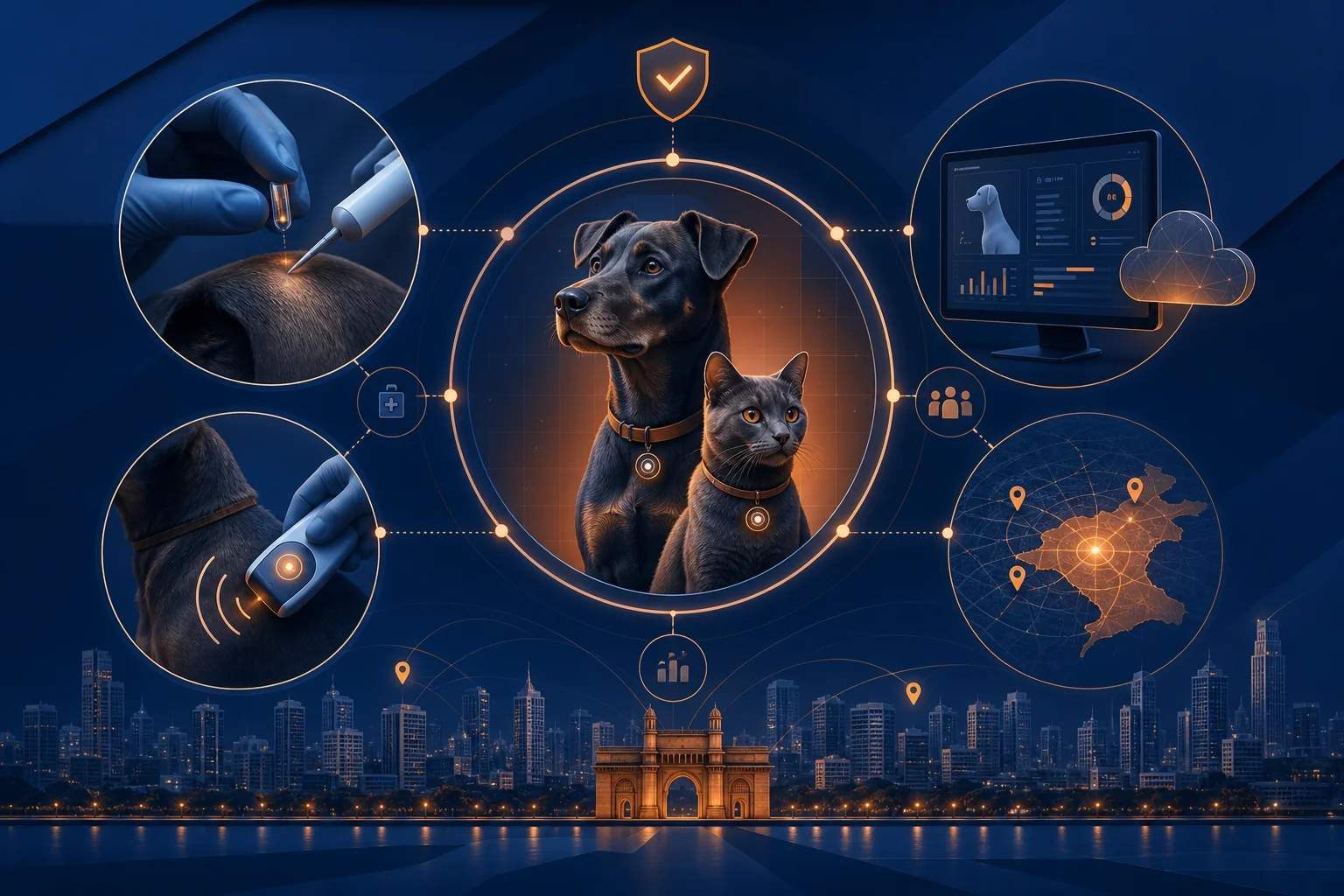
The Mumbai-based JeevOne Welfare Foundation has initiated a large-scale deployment of RFID-linked microchips designed to provide permanent, tamper-proof digital identities for companion animals. The organization successfully completed its inaugural implementation phase in Kharghar on September 6, 2026, where 25 dogs were equipped with biocompatible transponders.
Each microchip functions as a passive RFID tag, storing a unique identification number that acts as a primary key within a centralized database. This database architecture maintains comprehensive records, including the animal’s lineage, vaccination status, sterilization history, and specific guardian contact information. Unlike traditional physical identification methods such as collars or tags, which are prone to damage or removal, these subcutaneous implants offer a persistent data link.
The technical implementation relies on standard RFID scanning protocols, specifically operating at the 134.2 kHz frequency compliant with ISO 11784 and 11785 standards. This allows veterinary clinics, shelters, and municipal civic centers to retrieve animal records instantaneously using compatible hardware. By utilizing a standardized frequency for these transponders, the system ensures interoperability with existing scanning hardware found in modern clinical environments.
This digital integration facilitates the rapid recovery of lost animals and provides a reliable audit trail for medical interventions. The system architecture is designed to handle high-concurrency queries, ensuring that when a scanner reads a chip, the backend database returns the associated medical and owner metadata with minimal latency. This data-driven approach is essential for maintaining accurate records across disparate veterinary networks.
JeevOne Welfare Foundation founder Sanket Bhatt emphasizes that the primary objective is to establish a standardized data architecture for guardian accountability and population management. The system is engineered to mitigate the frequency of pet abandonment by linking the animal’s digital identity directly to registered ownership data. This creates a verifiable connection between the animal and its guardian, which is often absent in current manual record-keeping systems.
The initiative also addresses the broader technical challenge of managing stray animal populations through systematic data collection. By maintaining accurate medical and sterilization histories for street animals, the platform enables more precise tracking of public health metrics, such as vaccination coverage and disease prevalence. This data-driven approach is designed to replace legacy methods like ear-notching or localized collar systems that lack centralized digital oversight.
The organization is currently coordinating with regional veterinary networks to ensure that the necessary scanning infrastructure is widely available. This involves equipping municipal shelters and private clinics with the hardware required to query the central database effectively. As the program expands, the foundation intends to integrate these digital records into a national-scale registry, facilitating a more cohesive animal welfare registry system across India.
The shift toward digital identification reflects a growing trend among civic authorities to leverage technology for urban animal management. By transitioning from localized, paper-based, or visual identification to a centralized RFID-based architecture, stakeholders can achieve greater operational efficiency in animal welfare programs. This technological transition is essential for scaling registration efforts in densely populated urban environments where manual tracking is increasingly untenable.
A JeevOne ID Chip provides an animal with a permanent identity that cannot be lost, removed, or altered. By introducing a standardised identification system, the aim is to build a more organised and connected ecosystem for animal welfare in India.
The long-term viability of this project depends on the continued expansion of the scanning network and the adoption of the platform by residential housing societies and municipal bodies. Future milestones include the integration of real-time data synchronization between private veterinary practices and public health databases. These developments will likely determine the efficacy of the system in reducing the incidence of animal abandonment and improving the speed of recovery for lost pets.
The foundation is now focused on scaling its operations beyond Mumbai to include other major urban centers across Maharashtra. Success in these regions will serve as a proof-of-concept for a national rollout, providing a blueprint for other organizations seeking to modernize animal identification and tracking systems.