

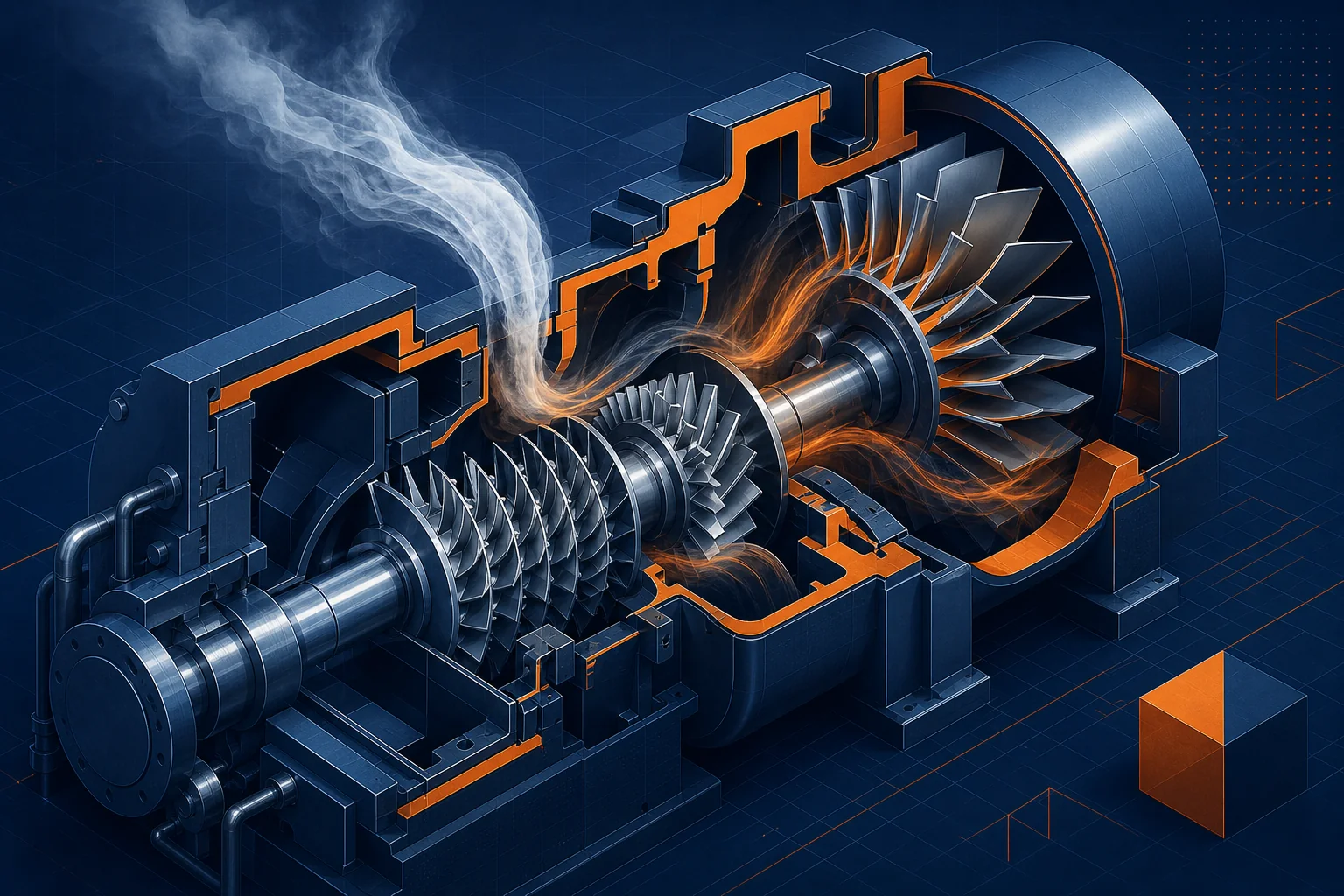
Small modular reactors (SMRs) are forcing a significant redesign of steam turbine architecture to address the unique challenges of high-moisture steam environments. While these reactors utilize power-output levels comparable to industrial or combined-cycle plants, their internal steam conditions often mirror those of large-scale nuclear facilities, necessitating a hybrid engineering approach.
The core technical hurdle involves managing exhaust moisture levels that frequently exceed 15% in SMR configurations. Unlike fossil-fired turbines, which typically operate with dry steam in high-pressure modules, SMR turbines must contend with liquid water throughout the majority of the flow path. This persistent moisture leads to the coalescence of water droplets, which causes significant erosion damage to turbine blades over time.
Engineers are addressing this by integrating advanced water extraction systems directly into the interim steam path. By utilizing centrifugal force to channel liquid droplets out of the flow, designers can prevent the moisture from reaching critical components. This mechanical separation is essential to maintaining the structural integrity of the high-pressure modules.
The implementation of slitted guide vanes allows for the removal of water films from stationary blade surfaces before they can strike the last-stage blades. These vanes utilize specific fluid dynamic profiles to strip the liquid film from the blade surface, effectively reducing the kinetic energy of the water droplets before they impact the rotating assembly. This process is critical for preventing the cavitation-like erosion that typically plagues high-moisture turbine stages.
Material integrity remains a primary concern due to the risk of stress corrosion cracking (SCC) in the presence of sustained tensile stress and corrosive media. Manufacturers are employing shot peening and strain hardening techniques on low-pressure module blades to combat these forces. These processes introduce compressive residual stresses that increase surface hardness and fatigue strength, thereby extending the operational life of the components.
Advanced metallurgical choices, such as high-chromium stainless steels, are being evaluated to provide superior resistance to the corrosive environment of wet steam. These alloys are selected for their ability to maintain mechanical properties under high-temperature cycling while resisting the hydrogen-induced cracking often observed in traditional turbine materials. Engineers are also utilizing finite element analysis to model the vibration modes of these blades, ensuring they remain outside the range of non-synchronous excitation.
The design requirements for SMR turbines are further complicated by the extended service life expected of these plants. Because SMRs are intended to operate for up to 80 years, the turbine island must be built to withstand twice the lifespan of traditional fossil-fueled equipment. This necessitates the use of lighter blade airfoils and enhanced blade root designs to manage the high centrifugal stresses generated during decades of continuous rotation.
Safety protocols for these turbine islands must also account for the proximity to the nuclear reactor core. Rigorous probabilistic analysis is required to ensure that even in rare failure scenarios, such as a turbine component detaching during operation, the risk to essential systems remains within acceptable regulatory limits. Control systems now incorporate redundant architectures that allow for functional testing of valves and critical components without requiring a full plant shutdown.
Operational considerations extend to radiation protection, particularly for SMRs utilizing boiling water reactor technology. In these systems, the turbine manages radioactive steam, which requires specialized maintenance procedures to minimize worker exposure. Operators are increasingly adopting design modifications, such as relocating the turning gear to the non-driven end of the generator, to facilitate safer manual intervention and reduce the need for staff to enter high-risk areas.
The shift toward these specialized turbine designs is fundamentally driven by the need to lower the levelized cost of electricity (LCOE). By increasing the efficiency of the turbine island and reducing the frequency of unplanned maintenance, operators can improve the overall economic viability of the SMR fleet. The ability to avoid premature parts replacement and minimize long modernization outages provides a clear path toward achieving the long-term cost targets necessary for widespread SMR deployment.
Future developments will likely focus on further refining blading geometries to maximize efficiency while maintaining structural resilience against wet-steam erosion. As the first generation of these reactors moves toward commercial operation, the performance of these turbine islands under real-world conditions will serve as a critical benchmark for the industry. Monitoring the long-term reliability of these components will determine whether the current design strategies successfully meet the 80-year service life requirement.