

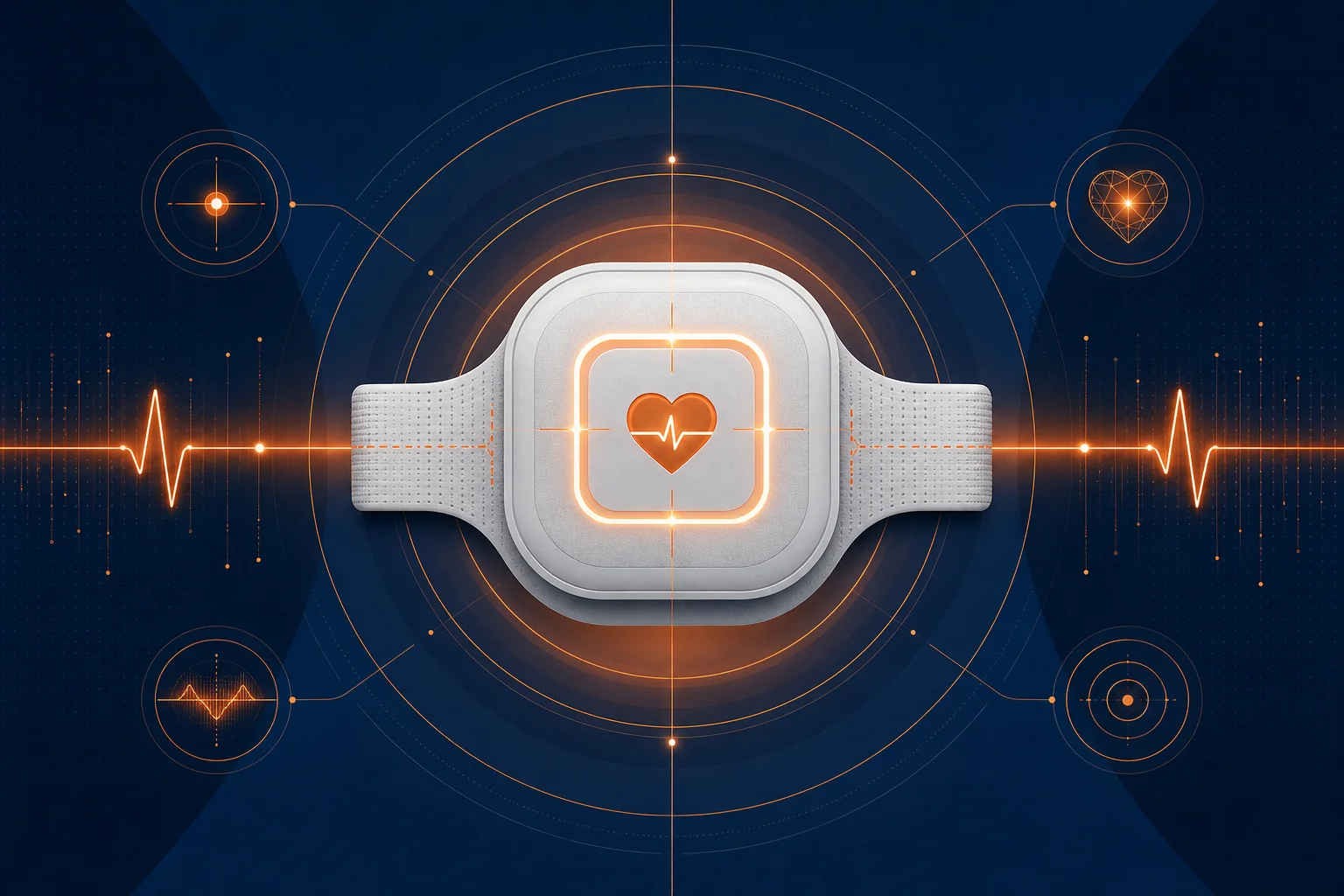
A team of four University of Washington students has secured the undergraduate first prize at the 2026 Collegiate Inventors Competition for the development of CPRight, a compact, wallet-sized patch designed to improve cardiopulmonary resuscitation outcomes. Announced on Friday, the invention provides immediate, visual feedback on chest compression depth and rate through integrated LED indicators, eliminating the need for complex external monitoring equipment during critical cardiac emergencies.
The device functions as a single-use, standalone patch that a rescuer applies directly to the patient’s sternum. By monitoring the mechanical force and frequency of compressions, the internal circuitry triggers visual cues that allow the operator to adjust their technique in real-time. This design prioritizes portability and ease of use, addressing the high mortality rates associated with out-of-hospital cardiac events where professional medical intervention is often delayed.
Shubham Bansal, Prisha Hemani, Deeya Sharma, and Nikhita Vaddineni engineered the patch under the academic supervision of Tristan Jafari. The National Inventors Hall of Fame, which organizes the annual competition, noted that the project addresses a significant gap in emergency medical response. Statistics provided by the organization indicate that more than 350,000 Americans suffer out-of-hospital cardiac emergencies each year, with survival rates currently hovering around 10 percent.
The competition also highlighted advancements in rehabilitation technology, including the Knee Artificial Intelligence Rehabilitation Sleeve, or KAIRS, developed by a team at the University of North Carolina at Chapel Hill. This system utilizes embedded sensors to track range of motion, feeding data into a cloud-based machine learning model for remote clinician review. By digitizing the recovery process, the system aims to bridge the gap for patients who face barriers to traditional physical therapy.
Neurological monitoring saw innovation through the development of NeuTrode, a flexible electrode array designed for electroencephalography. Created by researchers at the University of South Florida, the device replaces traditional conductive gels with a dry-contact interface that accommodates varying hair densities and skin conditions. This improvement in electrode design aims to increase the comfort and reliability of long-term brain activity monitoring for conditions like epilepsy.
The graduate category recognized ClearView-Jaw, a solution from the University of Pittsburgh School of Medicine designed to mitigate radiation backscatter in head and neck cancer patients. Titanium plates used in jaw reconstruction often interfere with radiation therapy, causing shadowing or unintended exposure to healthy tissue. The team developed a specialized shielding geometry to ensure radiation beams remain focused on tumor sites, potentially reducing the high complication rates currently seen in post-reconstruction treatment.
BioAxis, a graduate runner-up project associated with New York University, addresses rotator cuff repair using a bioresorbable hydrogel. By combining platelet-rich plasma with a synthetic polymer, the material adheres to damaged tissue to support structural integrity during the healing process. This approach targets the millions of Americans who suffer from partial-thickness rotator cuff tears annually, offering a potential alternative to more invasive surgical interventions.
The Collegiate Inventors Competition, established in 1990 and sponsored by the United States Patent and Trademark Office, serves as a platform for validating student-led innovation. Judges from the USPTO and the National Inventors Hall of Fame evaluated ten finalist teams based on technical ingenuity and potential for patent protection. Winners receive cash prizes and certificates for patent acceleration, providing a pathway for these academic prototypes to reach clinical or commercial viability.
Future development for these projects will likely focus on regulatory approval pathways and manufacturing scalability. The success of these teams underscores a broader trend of integrating machine learning and advanced materials into portable, patient-centric medical devices. Observers will monitor how these inventions transition from laboratory prototypes to standardized tools within the emergency and rehabilitative medical sectors.