

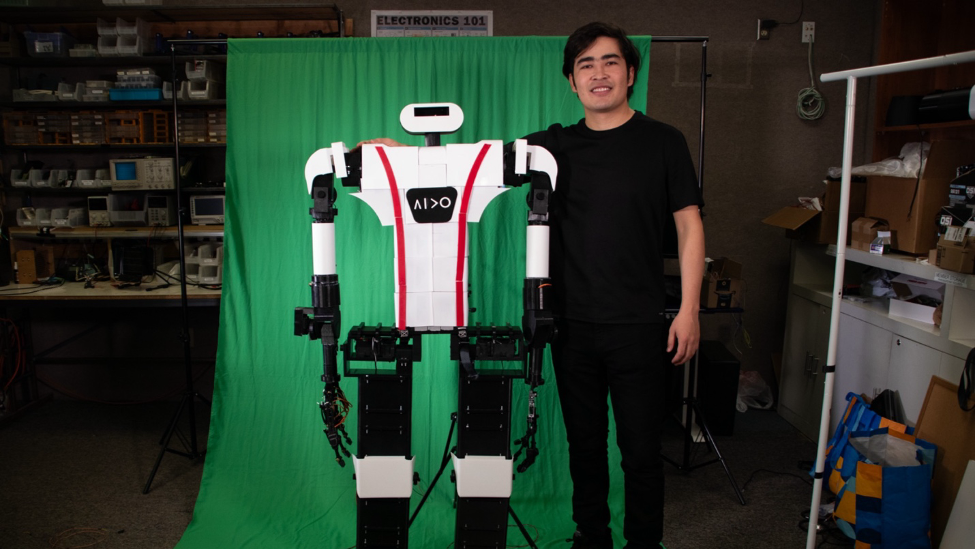
The integration of autonomous robotic systems into consumer and industrial spaces demands rigorous engineering and careful ethical consideration at every developmental stage. Developers face significant hurdles transitioning intelligent agents from controlled laboratory environments into dynamic, everyday scenarios where unpredictability is a constant operational factor.
Raufjon Odiljonov, a robotics engineer and serial entrepreneur, approaches these structural complexities by focusing on both physical hardware safeguards and advanced artificial intelligence architectures to ensure maximum reliability. Odiljonov has spent over a decade leading technology ventures such as APEX Cybernetics and Toycon, engineering automated solutions ranging from warehouse logistics to sophisticated hospitality platforms.
His current primary focus involves scaling an artificial intelligence-powered tutoring robot designed to democratize personalized education for children using advanced large language models. The practical deployment of these emerging technologies requires continuous evaluation of safety thresholds, data privacy protocols, and cultural adaptability across diverse international markets.
Navigating real-world safety risks
Deploying autonomous machinery in densely populated public environments necessitates comprehensive, multilayered hazard mitigation strategies. Industry regulatory standards establish clear technical specifications mapping allowable force and pressure levels to specific areas of the human body to guide physical harm avoidance. Even with structured frameworks outlining four distinct types of collaboration, physical and digital safeguards must operate in tandem to prevent localized mechanical failures.
Engineering teams consistently encounter significant challenges regarding broader public acceptance when introducing novel automated platforms into commercial workflows. Odiljonov notes, “Because robotics is still an emerging category for many users, there is often an initial layer of skepticism—especially around reliability, physical safety, and data privacy.” Addressing these profound concerns requires implementing strict emergency stop mechanisms and automatic shutdown protocols triggered immediately by malfunction detection algorithms.
Physical containment components represent only one facet of comprehensive operational security protocols required for enterprise systems. Ambiguities within international technical standards can produce logically conflicting definitions regarding human-robot contact, severely complicating formal risk assessments for software and hardware engineering teams. Odiljonov states, “Ultimately, our philosophy is that safety is not a single feature—it’s a continuous commitment embedded across hardware, software, and user experience.”
Resolving everyday ethical dilemmas
Introducing autonomous agents into domestic, retail, and warehouse settings exposes distinct operational vulnerabilities and structural limitations inherent in early-stage robotics. The transition from structured laboratory parameters to entirely unstructured public spaces severely tests the boundaries of machine reliability and spatial situational awareness. Odiljonov observes, “One of the most persistent ethical dilemmas in robotics today lies at the intersection of efficiency, trust, and real-world complexity.”
Establishing regulatory guardrails requires navigating complex laws governing modern technologies like automated share-trading systems, domestic robotics, and self-driving vehicles. Determining fault and assigning liability when machines operate with varying degrees of independence deeply complicates commercial scaling efforts across multiple global jurisdictions. Odiljonov points out, “Striking the right balance between automation and human oversight remains an ongoing challenge for the industry.”
Public reception of automated systems varies significantly based on regional governance frameworks and underlying sociological factors. Research indicates a higher acceptance of robots and AI within Eastern cultures, influenced by historical philosophies, compared to Western markets that consistently exhibit more consumer caution. These distinct societal reception patterns directly shape how manufacturers design transparent interfaces and privacy protocols for their hardware platforms.
Aligning global AI standards
Operating across international borders introduces fragmented compliance requirements and distinct cultural expectations regarding artificial intelligence deployment. Hardware and software deployment strategies must accommodate diverse data privacy laws and regional certification processes without fundamentally compromising the core system architecture. Developers must also expertly navigate localized infrastructure constraints while maintaining consistent operational performance across disparate global supply chains.
Customizing robotics products for diverse international geographies requires profound engineering flexibility rather than rigid system standardization. Odiljonov explains, “Each market has its own regulatory framework, cultural perspective, and pace of adoption, which requires a highly adaptable approach.” Building highly adaptable AI systems allows global companies to address Western demands for strict regulatory oversight alongside rapid commercialization trends in other key geographic regions.
Corporate governance models increasingly focus on embedding ethics reviews into all phases of artificial intelligence service planning and development to ensure strict privacy and data security. By treating localized compliance requirements as foundational architectural prerequisites, robotics firms can highly optimize their global distribution networks and avoid costly hardware retrofitting. Odiljonov states, “These differences are not obstacles—they are design inputs.”
Scaling interactive language models
The integration of advanced conversational language models has fundamentally altered how machines process user inputs and generate complex interactive responses. Generative neural architectures enable highly dynamic conversational interactions, drastically reducing the traditional friction between human voice commands and digital execution. However, these open-ended generation capabilities introduce immediate, pressing risks of conversational system drift and output unpredictability during extended operation.
Developers deliberately mitigate these risks by engineering specific architectural boundaries to strictly constrain large language processing modules. Security teams proactively design and test prompts to uncover system vulnerabilities and counter evasion techniques that attempt to frame malicious requests as completely benign scenarios. Odiljonov observes, “While LLMs accelerated our ability to develop features—especially for products like our tutoring robot—they also introduced new safety considerations.”
Maintaining coherent and developmentally appropriate machine dialogue requires sophisticated language filtering systems and rigorously controlled conversational response frameworks. Cloud computing advancements facilitate faster, highly scalable model deployment, which simultaneously demands heightened regulatory scrutiny over enterprise data handling practices. Odiljonov notes, “Each new capability comes with a responsibility to ensure that safety, reliability, and ethical considerations evolve alongside the technology.”
Protecting vulnerable user populations
Designing robotics for specialized vulnerable demographics, particularly younger users, demands exact alignment between machine intent and operational execution. Engineering a multi-modally rich and human-like multiparty tutoring agent introduces profoundly complex variables regarding behavioral influence and prolonged emotional engagement. The underlying generative algorithms must remain strictly confined to predetermined educational contexts to successfully prevent any unintended conversational digressions.
Educational robotics platforms require highly robust system architectures that build a situated model of interaction, accounting for user engagement, changing personalities, and intricate conversational dynamics. Deploying these sophisticated learning systems in public or scholastic environments vastly amplifies the need for absolute operational stability and student privacy. Odilov states, “Working with children requires a much higher standard of care.”
The commercialization of interactive educational technology involves bridging the critical gap between rapid technical advancement and long-term societal impacts. Incorporating multilayered digital safety guardrails ensures that precise interaction boundaries remain flawlessly intact during extended daily use by vulnerable student populations. Odiljonov adds, “Ultimately, innovation and responsibility are not opposing forces.”
Building shared team accountability
The development of complex automated platforms relies heavily on the intricate coordination of multidisciplinary engineering divisions distributed globally. Hardware integration, software control architecture, and neural network training parameters must align perfectly to produce reliable, market-ready commercial robotics products. Artificial intelligence models trained on 20,000 hours of real-world data require incredibly precise synchronization across cross-functional engineering departments.
Technical proficiency alone remains highly insufficient for managing the multifaceted ethical implications of high-stakes technological deployments. Evaluating the broader downstream impact of specific design choices helps developers mitigate long-term consequences associated with autonomous operations in uncontrolled environments. Odiljonov notes, “The quality of the team ultimately determines the quality, safety, and reliability of the product.”
Corporate engineering culture dictates exactly how essential safety protocols are comprehensively implemented during the rapid prototyping and iteration phases. Establishing clear internal accountability standards ensures software engineers actively weigh user trust alongside traditional computational performance metrics. Odiljonov explains, “When teams are aligned on values and empowered to act responsibly, ethical behavior becomes a natural outcome rather than a forced requirement.”
Ensuring transparent data practices
Information security protocols form the foundational baseline for establishing public trust in automated consumer electronics and enterprise robotic platforms. Devices equipped with advanced visual, auditory, and spatial sensors process vast amounts of highly sensitive environmental data during standard, daily operation. Safeguarding this continuous telemetry requires investing heavily in a robust security infrastructure that strongly protects against unauthorized external network access.
Predictable machine behavior consistently provides end users with essential operational clarity and reduces friction during human-computer interaction. Human-in-the-loop algorithmic training approaches, combined with a multimodally rich, game-solving dataset, significantly refine how robotic systems interpret complex commands and translate them into physical actions. Odiljonov remarks, “Transparency around data usage is not an afterthought—it’s a core part of our product experience.”
Educating the broader consumer base on operational mechanics effectively demystifies the complex internal decision-making pathways of deep neural networks. Specific human-computer interface designs can successfully induce silent feedback during face-to-face active listening, allowing AI systems to communicate their processing states without verbal interruption. Odilov states, “Transparency, in our view, is about more than explanation—it’s about giving users confidence that the system is designed, trained, and deployed responsibly.”
Frameworks for everyday autonomy
The future of automated deployment hinges on solving the fundamental generalization gap inherent in current neural network architectures. Advancements in simulation-to-real transfer are testing frameworks that combine an autoregressive model with a diffusion policy to drastically increase processing speed and zero-shot object recognition accuracy. These hybrid methods aim to stabilize physical interactions when machines encounter unfamiliar objects, as demonstrated by systems that achieved an average success rate of 96.4% on continuous control benchmarks.
Benchmarking these new algorithmic paradigms reveals a distinct trade-off between policy architectures regarding trajectory smoothness and grasping success across varying object sizes. Validating these complex models through a hierarchical test-time verification pipeline yields significant performance gains in out-of-distribution environments compared to simply scaling pre-training parameters. Odiljonov states, “Unlike controlled settings, the real world presents countless edge cases, and today’s systems often struggle to generalize beyond what they’ve been explicitly trained on.”
The progression toward general-purpose utility relies heavily on models that parse multimodal sensory inputs and execute complex spatial reasoning simultaneously. Parallel processing architectures that use masked diffusion models for parallel and iterative refinement demonstrate higher overall success rates in complex robotic manipulation tasks. Odilov concludes, “Responsible scaling is not just about making robots more capable; it’s about ensuring they remain predictable, safe, and aligned with human needs as they become part of everyday life.”
The trajectory of commercial robotics relies fundamentally on resolving the ongoing friction between algorithmic potential and physical reality. Expanding autonomous functionality into diverse human environments necessitates a strict structural commitment to hazard mitigation, data protection, and continuous system verification. As engineering paradigms shift toward more adaptable foundational models, the focus remains resolutely on securing operational reliability and sustaining public trust.