

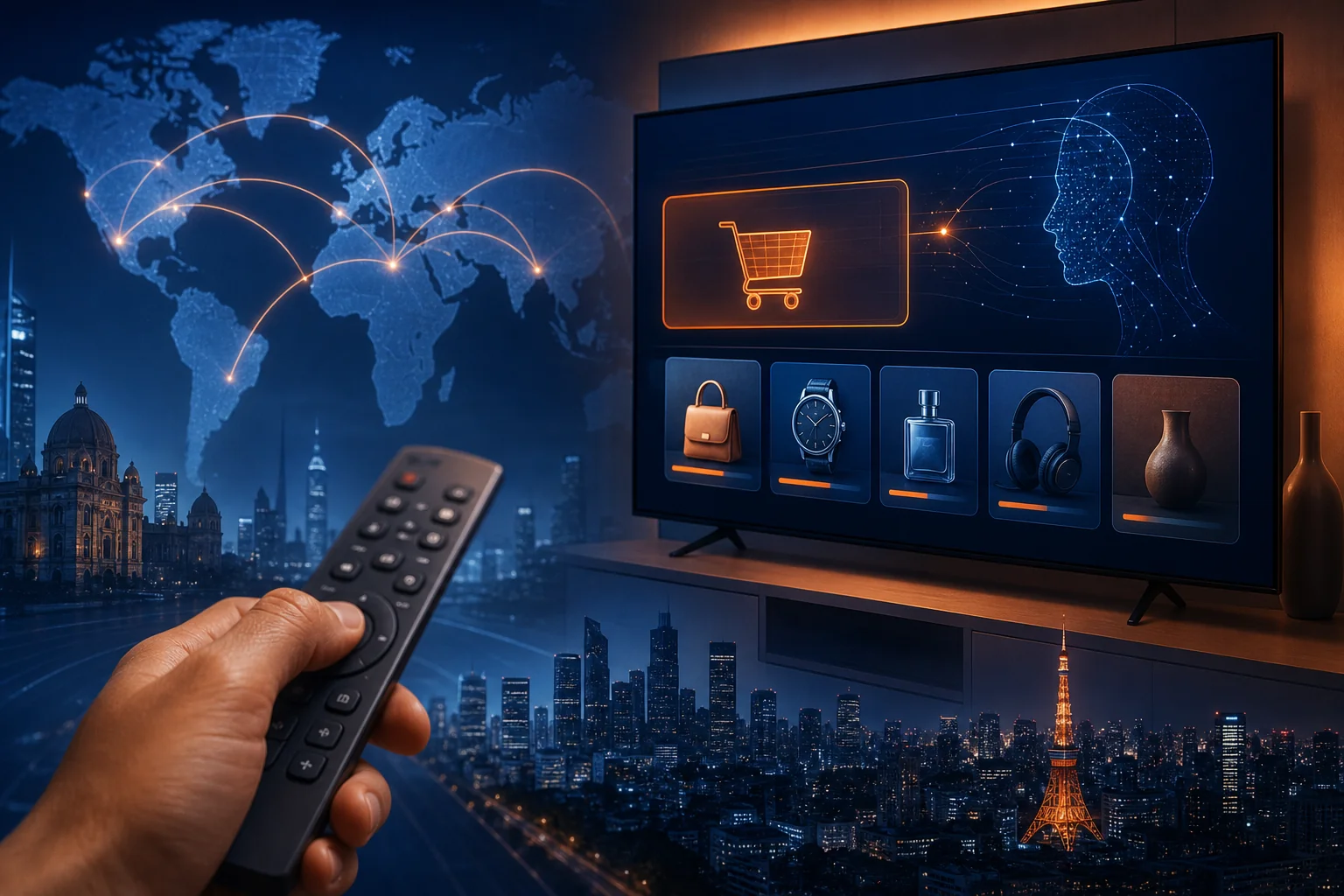
Google and Glance announced a strategic partnership on Wednesday to deploy an artificial intelligence-based shopping interface across Android TV devices in India, the United States, and Japan. This integration repurposes the television ambient display—typically reserved for static imagery or clock widgets—into an interactive portal for lifestyle discovery and direct retail transactions.
Glance, an affiliate of the mobile advertising technology firm InMobi, leverages its existing infrastructure to push curated high-definition content to smart TV screens. The platform utilizes proprietary machine learning models to analyze viewer preferences and serve content focused on fashion, home decor, travel, and wellness. By replacing the default Google Backdrop, the system aims to convert dormant screen time into an active retail channel.
The technical architecture centers on a “Shop the Look” feature that enables virtual product visualization directly on the television interface. When a user identifies an item of interest, the system facilitates a transaction through integrated retail partner networks. This process effectively synchronizes the shopping cart experience between the smart television and the user’s mobile device, acting as a personal concierge for lifestyle purchases.
Naveen Tewari, founder and chief executive officer of InMobi and Glance, emphasized that the arrangement shifts home entertainment from a passive activity to a functional one. The system bridges the gap between visual inspiration and purchasing intent by embedding commerce directly into the ambient layer of the operating system. This move builds upon previous distribution efforts by Glance, which has already established integrations with telecom operators such as Bharti Airtel and DirecTV.
Google maintains a strict opt-in architecture for this feature to ensure user interface autonomy. Android TV owners retain full control over their ambient screen settings, meaning the standard Google Backdrop remains the default unless the user manually activates the Glance service. This design choice prevents the forced injection of commercial content into the user experience, prioritizing platform stability and user preference.
The integration process involves a seamless handoff between the television’s ambient mode and the backend retail API. By utilizing the existing Android TV framework, the developers ensure that the shopping layer does not interfere with system resources or background media playback. This modular approach allows the service to remain lightweight while providing high-fidelity visual simulations for potential buyers.
The collaboration highlights a broader industry trend toward maximizing the utility of idle hardware resources through edge-based AI processing. By deploying these models on the television, the companies reduce the latency associated with remote server requests for high-resolution image rendering and try-on simulations. The system relies on the existing Android TV ecosystem to manage these background processes without compromising the performance of primary media applications.
Market analysts view this deployment as a significant expansion of the Glance footprint into the living room environment. By targeting three distinct geographic markets—India, the United States, and Japan—the companies are testing the scalability of their AI-driven retail model across diverse consumer demographics. The success of this rollout will likely depend on the depth of the retail partner network and the accuracy of the underlying recommendation algorithms.
Industry observers note that the shift toward ambient commerce represents a fundamental change in how hardware manufacturers monetize idle screen time. Rather than relying solely on traditional advertising, companies are increasingly turning to integrated, intent-based shopping experiences that provide tangible value to the consumer. This strategy effectively turns the television into a high-conversion retail endpoint that operates during periods of inactivity.
Future updates to the platform will likely focus on refining the virtual try-on technology and expanding the category reach of the retail partners. Stakeholders remain focused on how this ambient commerce model affects long-term user engagement metrics on the Android TV platform. The industry will monitor subsequent adoption rates to determine if television-based shopping becomes a standard component of smart home ecosystems.