

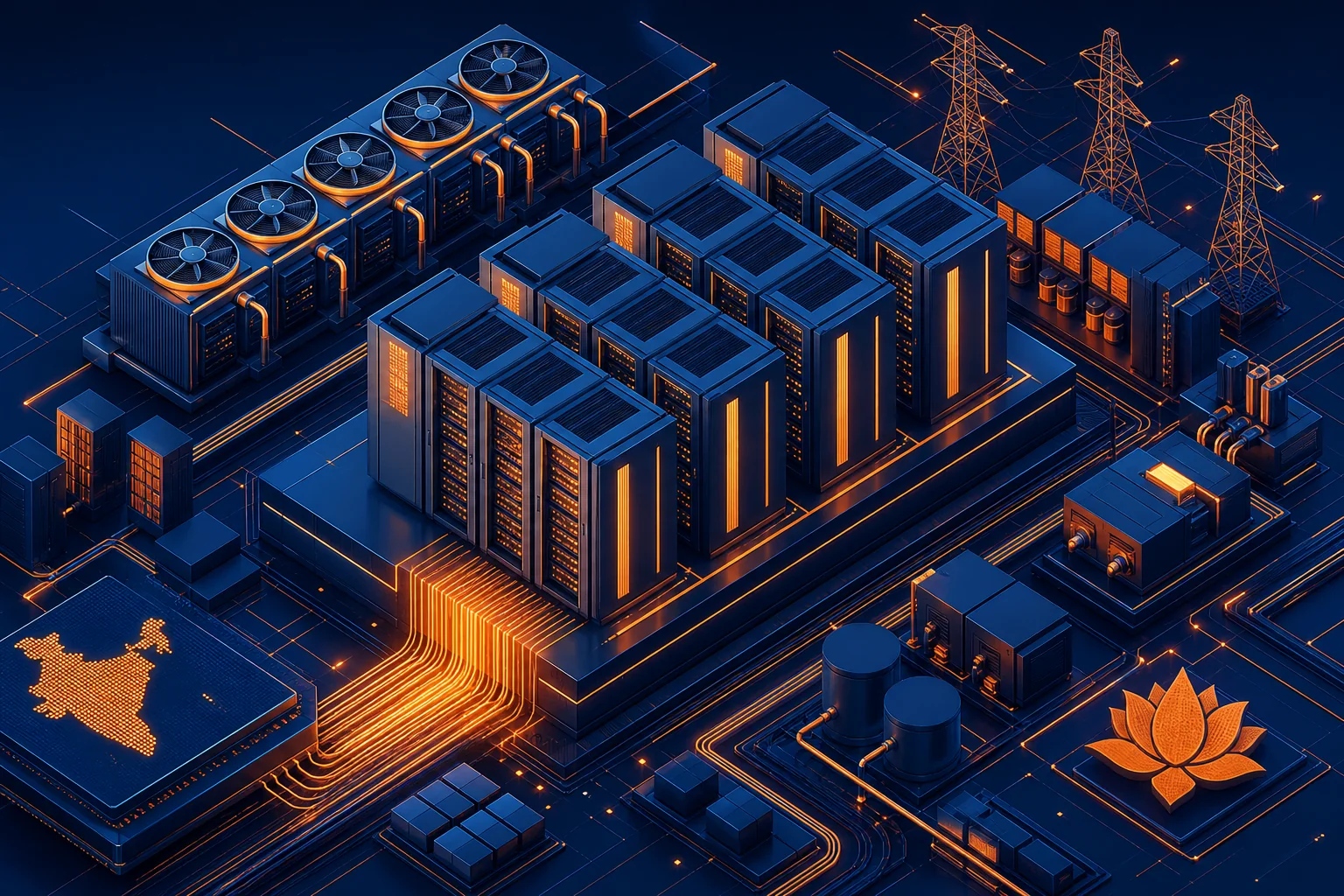
India is positioning itself as a global hub for digital infrastructure, with a new analysis from KPMG projecting a 90 billion dollar market opportunity for construction and engineering firms by fiscal year 2035. This growth trajectory, which accelerates from an estimated 30 billion dollar valuation by 2030, reflects the nation’s push to scale its data center capacity to between 7 and 7.5 gigawatts within the next five years.
The projected 90 billion dollar figure encompasses a diverse range of engineering requirements, with design and construction services alone accounting for 27 billion dollars of the total. Cooling infrastructure represents a significant secondary market valued at 24 billion dollars, while internal power distribution systems are expected to contribute 18 billion dollars. External power grid upgrades, essential for supporting these high-density facilities, are slated to add another 12 billion dollars to the infrastructure pipeline. Networking and security systems round out the remaining 10 billion dollars, split evenly between the two sectors.
Artificial intelligence is fundamentally altering the technical specifications of these facilities, necessitating a departure from traditional design paradigms. Standard server racks typically operate within an 8 to 12 kilowatt power envelope, but AI-optimized racks now demand 50 to 60 kilowatts per unit. This fivefold increase in power density requires a complete overhaul of internal electrical distribution architectures to handle higher currents and heat dissipation loads.
Thermal management is undergoing a parallel transition as air-based cooling systems struggle to manage the heat flux generated by high-performance computing hardware. Liquid and water-based cooling solutions are becoming the industry standard to maintain operational efficiency for AI workloads. This shift creates a specialized market for precision cooling components that currently rely on international supply chains.
Domestic manufacturing capabilities in India remain established in civil construction, cooling tower fabrication, and fiber-optic cabling, providing a solid foundation for the expansion. However, the nation continues to depend on imported technology for advanced grid management, battery energy storage systems, and active network hardware. Bridging this technological gap remains a primary challenge for local engineering firms looking to capture a larger share of the value chain.
Execution speed serves as the ultimate differentiator in this competitive market, particularly concerning the synchronization of electrical, mechanical, and commissioning workflows. KPMG emphasizes that the success of these projects depends on the collaborative efforts of developers, utility providers, and regulatory bodies to mitigate construction timelines. Delays in power grid connectivity represent the most significant bottleneck for developers attempting to bring capacity online at scale.
The transition toward high-density AI infrastructure highlights the necessity of localized engineering expertise in managing complex mechanical and electrical systems. As the industry scales, the ability to integrate sophisticated power distribution with advanced thermal management will determine which firms succeed in the market. Stakeholders are now focusing on enhancing domestic commissioning capabilities to reduce reliance on foreign technical support for these critical systems.
Future market stability will likely depend on the successful integration of domestic manufacturing with global standards for high-density hardware. Developers must address the specific hurdles of securing high-voltage power grid capacity and overcoming supply chain constraints to meet the aggressive growth targets set for the next decade. Monitoring the deployment of liquid cooling technologies and grid-scale energy storage will provide the clearest indicators of progress toward these infrastructure goals.
The broader economic impact of this infrastructure build-out extends beyond the data centers themselves, influencing regional power utility investments and industrial manufacturing standards. By prioritizing the localization of specialized components, Indian firms can reduce long-term operational costs and improve the reliability of the national digital grid. This structural shift represents a long-term commitment to maintaining competitiveness in the global data economy.